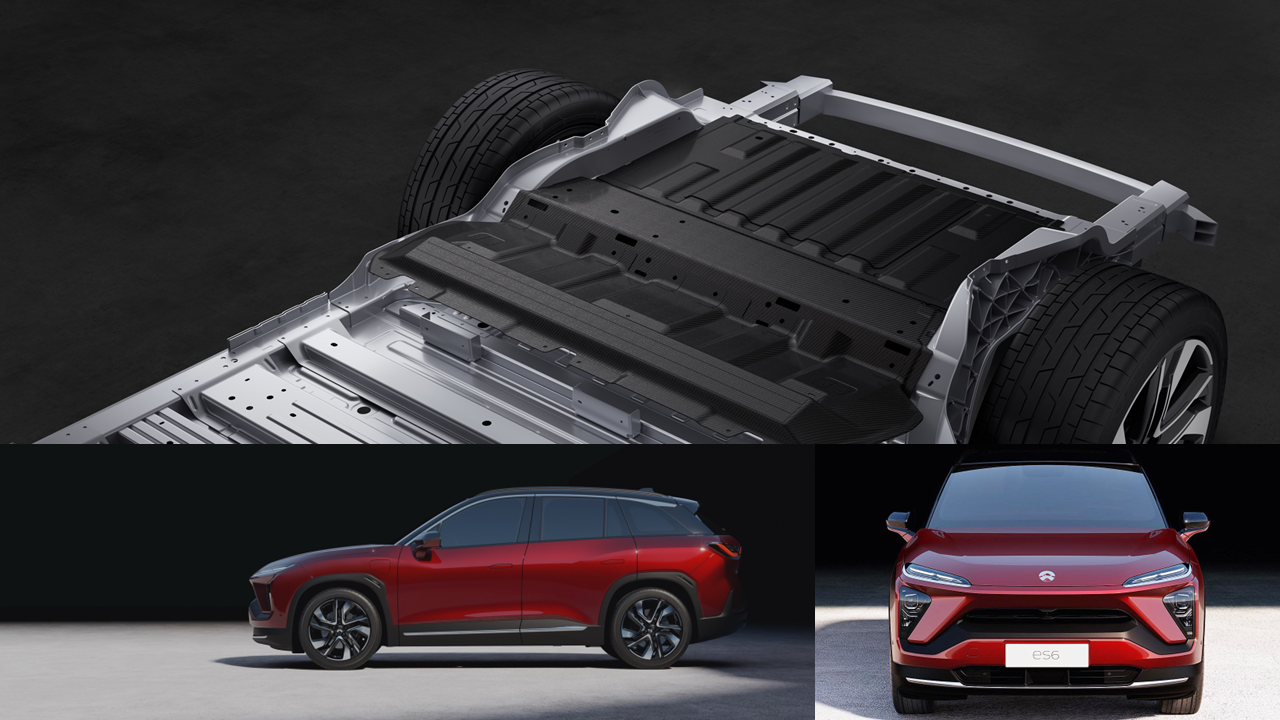
Body Development
Developing innovative body structures today for the unique demands of tomorrow.
The challenges for future vehicle architectures are numerous and complex.
- Modern car bodies are subject to many boundary conditions that must be carefully considered to realize the optimal cost, mass and performance balance
- Platform architectures must accommodate different drive technologies, body shapes and country-specific variants while meeting all the aforementioned conditions
- New and emerging materials and manufacturing technologies must be evaluated very early in the development process and prioritized in a structured and objective manner
- Continuously evolving regulatory requirements for crash performance, must be considered for both incumbent materials as well as alternates requiring rapid material card synthesis and development
The FE approach:
- Structured stage gated mixed material body structure development programs incorporate comprehensive alignment and pre-dimensional analysis to quickly and efficiently focus the team
- Complete toolbox of materials (and material cards) and manufacturing processes including fiber reinforced polymers and composites, metals, specialty materials and their associated joining technologies
- “Simulation Driven Design” accelerates concept development, provides optionality throughout the program and, ensures visibility to meeting cost and performance goals at each stage of the program
- Advanced CAE team with comprehensive material card database supporting analysis of designs with incumbent materials as well as fast-track synthesis of proxy material cards and supervision of modular material card development program
- “Production Based Engineering” delivers a TRL (Technical Readiness Level) appropriate design aligned with the time horizon of your program
- With our experienced body structures development team and global partner network, we manage the development of complete body systems from concept development through component, system and complete body structure prototype production, testing and validation

Battery Enclosure Design
A complex subsystem which demonstrates the power of a mixed material composite intensive design.
- The challenge is flexibly adapting the battery enclosure design to dynamically changing boundary conditions
- The electrification revolution has only just begun
- Energy storage (cells), powertrain and vehicle configurations are in their early stages of maturity
The FE approach:
- Holistic development of high voltage battery structures from the cell through the enclosure and complete vehicle integration, considering the respective functional and performance goals
- Comprehensive understanding of regulatory and technical requirements and alignment around your unique product and customer requirements
- Complete toolbox of materials (and material cards) and manufacturing processes including fiber reinforced polymers and composites, metals, specialty materials and their associated joining technologies
- “Simulation Driven Design” accelerates concept development, provides optionality throughout the program and, ensures visibility to meeting cost and performance goals at each stage of the program
- “Production Based Engineering” delivers a TRL (Technical Readiness Level) appropriate design aligned with the time horizon of your program
- Unique, battery enclosure specific, coupon, plaque, component and system level prototype production, testing and validation programs through our global partner network
- A trusted partner to simplify the complexities of working across multiple disciplines unique to the design, development and validation of high voltage battery enclosures
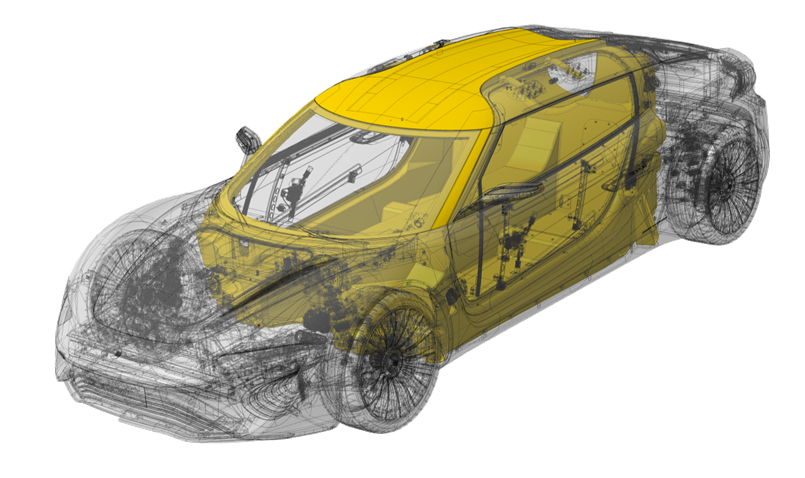
Composite Monocoque Development
A highly integrated mass and cost-efficient solution.
The challenge is effectively bringing together design, material, and process into a complex highly integrated one-shot structural solution.
- Eliminating post forming joints and redundant materials, composite monocoques offer exceptional structural performance and mass savings potential for high performance applications
- In select applications, composite monocoque structures can deliver mass and cost-efficient solutions for higher volume commercial applications
- The highly integrated composite monocoque design requires a unique iterative analysis of design, materials and production processes to optimize load path, geometry and material placement
- A deep understanding of composite materials, processing and simulation is required to develop the virtual validation models required prior to advancing to physical prototype which is particularly important given the relative size and complexity of these structures
The FE approach:
- FE’s history is rooted in the design and development of complete homologated composite monocoque vehicle structures using the latest state-of-the-art materials and manufacturing technologies
- From clean sheet of paper through complete homologated vehicle structures, the FORWARD team leverages “Simulation Driven Design” and “Production Based Engineering” to develop unique designs specific to the application requirements
- Bringing all disciplines together into a powerful solution: established CAE material cards, in-depth material and manufacturing know-how and an experienced monocoque development team are the recipe for success
- Whether a small-series high performance application or a large scale cost-effective new mobility program, together with our strong manufacturing partners, FORWARD is the one-stop provider for the implementation of monocoque projects
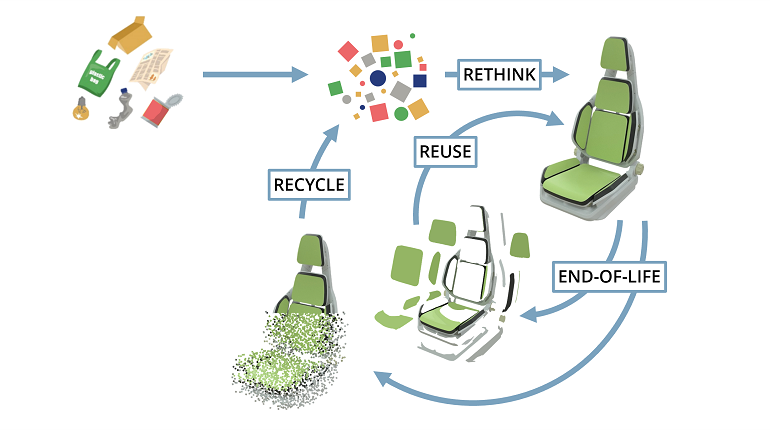
Design for sustainability (DfS)
A capable and holistic approach for the development of sustainable products.
The challenge is how to transition products from historically linear extractive/consumption-based designs to sustainable solutions suited for a circular economy.
- Legislation and societal expectations are evolving as we transition toward a more sustainable society and closer to a circular economy
- Globally, new regulations are being developed for measurement of a products environmental impact and requirements on end-of-life disposition
- Leading OEMs are developing standards which compel upstream suppliers to provide LCA data for inclusion in their product approval submittals
- A lack of interdisciplinary cooperation along the life cycle (Designing in Silos) and a lack of capable end-of-life strategies complicate industry stakeholder’s efforts to develop sustainable designs
The FE approach:
- FORWARD’s DfS Program provides an inter-disciplinary perspective throughout the entire product development process from concept ideation through identification of end-of-life disposition
- Development of a common sustainability framework, based on the latest regulatory and customer requirements, enables the design team to establish clear product specific design targets
- Through interactive workshops, the team leads the comprehensive Life Cycle Assessment (LCA) process providing a clear basis for the entire organization to understand the implications of each design decision
- Drawing from our broad product design experience and the comprehensive and evolving database of sustainable materials and processes, the FORWARD team is able to challenge the target product’s functional requirements and support the development of new sustainable design concepts
- With unique access to a global network of experts and technology providers, the individual elements of a sustainable product design are combined to create an economically successful overall solution